

 4 min read
2027 Shipping Rate Increases: What UPS, FedEx and USPS Are Changing
UPS, FedEx and USPS are all raising rates for 2027, and all three have landed on the same headline number: a 5.9% average increase. The changes arrive on three different dates over four weeks, starting December 21.
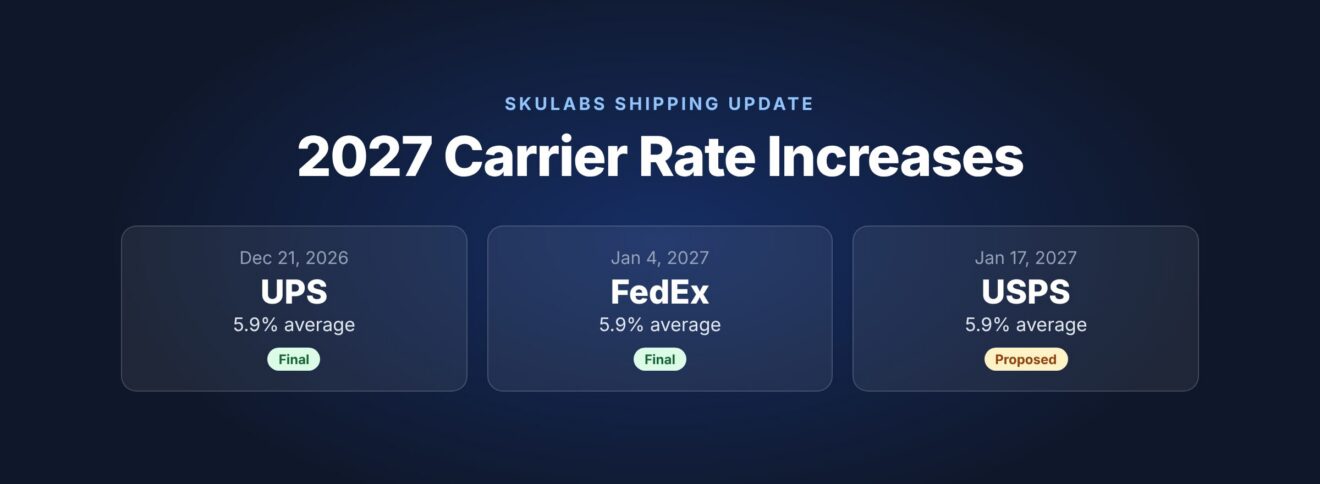
2027 rate change timeline
December 21, 2026
UPS
5.9% average
Final
January 4, 2027
FedEx
5.9% average
Final
January 17, 2027
USPS
5.9% average (domestic)
Proposed
| Carrier | Average increase | Effective date | Status |
|---|---|---|---|
| UPS | 5.9% | December 21, 2026 | Final |
| FedEx | 5.9% | January 4, 2027 | Final |
| USPS | 5.9% domestic 7.9% international |
January 17, 2027 | Proposed |
An average is not a budget. Your actual increase depends on the services, zones and package weights you ship most. Below is what each carrier has confirmed so far, and what you can do to keep your cost per order in check.
UPS: 5.9% average, effective December 21, 2026
UPS moves first this year. Its daily rates for UPS Ground, UPS Air and international services increase by an average net 5.9% starting December 21, 2026. That is two weeks ahead of FedEx and lands in the middle of peak season, so any labels you print from December 21 on will use the new rates.
If UPS is your main carrier, plan to review your shipping costs before the holidays rather than after.
FedEx: 5.9% average, effective January 4, 2027
FedEx standard list rates for U.S. package services, including imports and exports, increase by an average of 5.9% starting January 4, 2027. This is the fourth year in a row FedEx has set its increase at 5.9%.
FedEx is also updating its surcharges, fees and minimum charges alongside the base rates. Those changes are on top of the 5.9%, so sellers who ship mostly residential or oversized packages may see an effective increase above the headline number.
USPS: proposed changes for January 17, 2027
As filed, the changes would include:
- Domestic shipping: an average 5.9% increase for USPS Ground Advantage, Priority Mail, Priority Mail Express and Parcel Select
- International shipping: an average 7.9% increase for Priority Mail International, Priority Mail Express International, First-Class Package International Service and International Priority Airmail
- Fuel surcharge: the temporary 8% price increase that has been in place since April 2026 would become a permanent fuel surcharge, with an added 3% for a total of 11%. USPS plans to revisit that rate in July 2027 based on fuel prices.
- Holiday pricing: the temporary peak season prices are scheduled to end on the same date, January 17, 2027
The fuel surcharge is the piece to watch. It turns a temporary increase into an ongoing one that can move during the year, which makes USPS costs harder to predict than in past years. We will update this post once the changes are approved.
How to offset the increases
You cannot stop a rate increase, but you can control which carrier and service each order ships with, and avoid the fees that stack on top. Here is where to start.
- Rate shop every order. With all three carriers changing prices on different dates, the cheapest option for a given package may change more than once between now and late January. Comparing rates across carriers at the time you print each label keeps you on the lowest price without checking manually.
- Set shipping rules by weight, zone and destination. Automate which carrier and service each order gets, so light residential packages and heavier ground shipments each go to the carrier that prices them best.
- Validate addresses before you print. Bad addresses lead to correction fees and returned packages. Catching them before the label is printed is the cheapest fix. See Address Validation: The Cheapest Way to Cut Returned to Sender Packages.
- Enter accurate package dimensions. Carriers bill on dimensional weight, and USPS now charges extra when dimensions are missing. See USPS Parcel Dimension Requirement: How to Avoid the $3 Fee.
- Review your negotiated rates. A rate increase is a good time to revisit your carrier agreements, since your discount may not keep pace with list price changes. Our guide on carrier negotiated service agreements covers how to approach it.
- Stop paying per label. If your shipping software charges a fee for every label, that cost grows with your volume. SKULabs does not charge label generation fees.
Your January checklist
- Re-run your average shipping cost per order once each carrier’s new rates are live
- Update the shipping rates you charge customers at checkout
- Check whether your free shipping threshold still covers your costs
- Review your shipping rules and carrier mix after December 21, January 4 and January 17
- Watch for the final USPS approval and the July 2027 fuel surcharge review
SKULabs compares UPS, FedEx and USPS rates on every order and applies your shipping rules automatically, so new prices are reflected the moment they take effect.


