

 3 min read
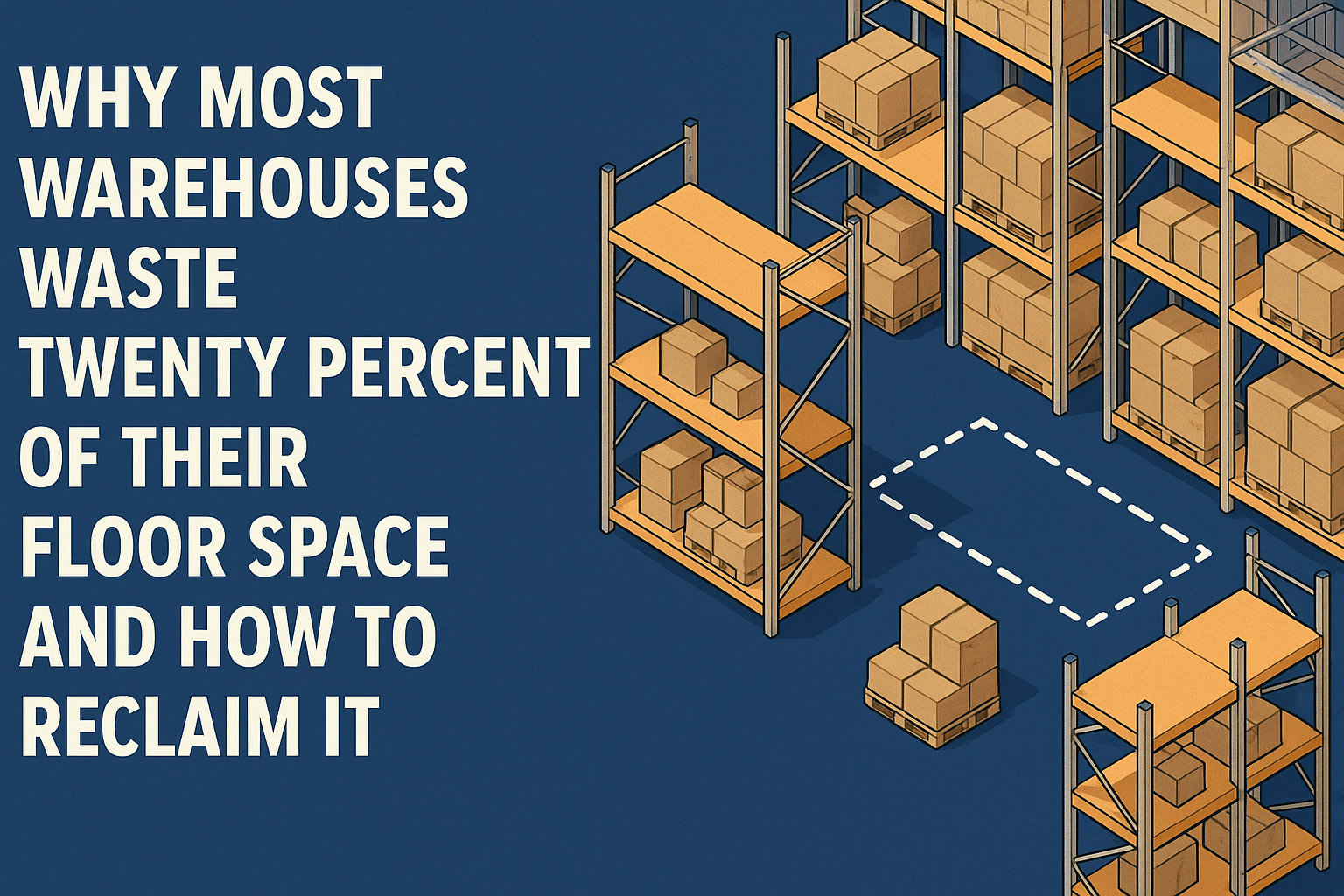
 Most warehouses believe they are using their square footage effectively, but industry research continues to show otherwise. In recent facility audits across the United States the average warehouse operates at only about seventy five percent utilization. That means roughly one quarter of available floor space is wasted or used in a way that does not contribute to storage or fulfillment output. This number remained consistent in industry studies conducted through 2024 and is expected to stay similar through 2025 as many facilities continue to run on outdated layouts and manual planning strategies.
The biggest causes of wasted space are surprisingly common. Aisles that were designed for older equipment are often far wider than needed today. Storage racks are not sized to match product dimensions which creates large pockets of empty air. Many facilities do not take advantage of vertical space, leaving tall ceilings unused while floor level racks overflow. Other warehouses keep excess buffer stock or create staging zones that slowly expand over time and consume large areas without adding measurable value to operations.
A recent survey of supply chain managers found that more than fifty percent of wasted warehouse space is the result of poor slotting strategy and unoptimized aisle layouts. Another study in 2024 reported that facilities using modern digital planning tools reduced wasted space by up to forty percent simply by reorganizing storage density and traffic flow. These improvements do not require additional real estate, which is important because commercial warehouse rent per square foot increased again in 2024 due to higher demand in ecommerce and third party logistics.
Fortunately there are practical ways to reclaim that lost space.
Use data driven slotting
Matching rack sizes and bin locations to actual product dimensions can uncover immediate space gains. Many facilities discover that a large percentage of their items fit into smaller or more efficient locations.
Improve vertical storage
Adjustable racking, taller shelving, and mezzanine platforms add significant cubic capacity without expanding the building footprint. Facilities that adopt vertical optimization often reclaim ten to 20 percent of usable capacity.
Reduce non value zones
Aisles, staging areas, and forklift paths are necessary, but they frequently grow larger over time. Regular layout evaluations can shrink these areas back to the size required to operate safely and efficiently.
Adopt a warehouse management platform
Digital tools reveal unused areas, slow moving products, and inefficient pathways. Businesses that adopt real time warehouse management systems report better utilization, higher throughput, and fewer blind spots in their storage plan.
SKULabs helps companies identify inefficient space usage through real time visibility of inventory locations and slotting activity. When teams can see what is slow moving, what is misplaced, and what is consuming more room than necessary, they start to recover space that was overlooked for years.
If you want to understand how much space your facility might be wasting, reach out to the SKULabs team for a walkthrough of the tools that help uncover unused areas and guide you toward a more organized and productive layout. The goal is not to sell you more software. The goal is to help you reclaim space that you are already paying for.


