

 4 min read
 One of the most important decisions an inventory manager makes is knowing when to reorder inventory. Surprisingly, most businesses do not experience stockouts because they forgot to place a purchase order. They run out of inventory because they waited too long.
That is where a reorder point becomes essential.
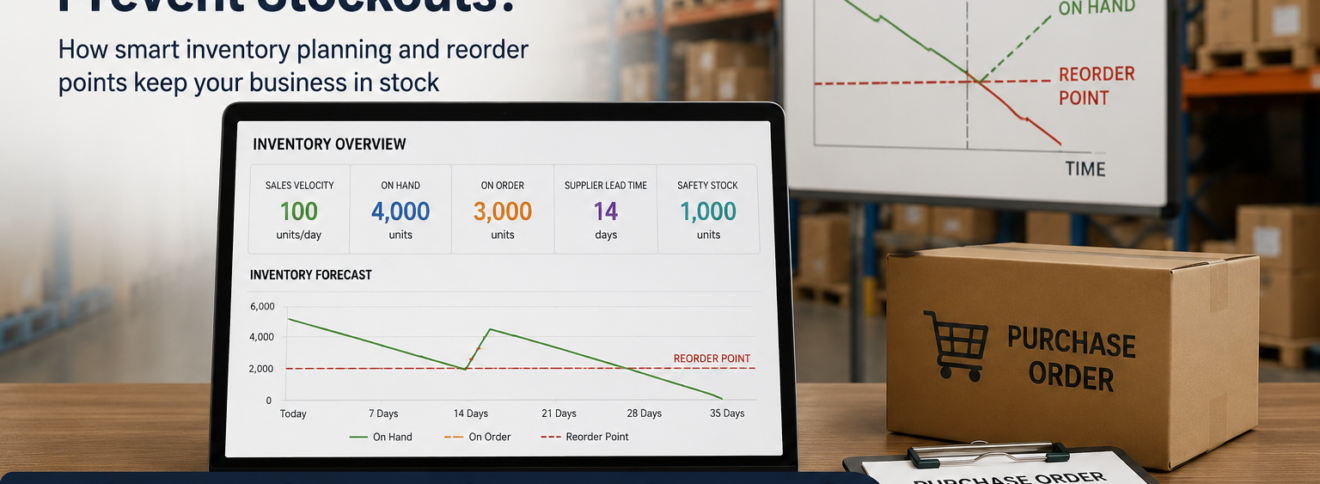
A reorder point is the inventory level at which a new purchase order should be placed to ensure new inventory arrives before existing stock is depleted. Rather than reacting after products run out, businesses use reorder points to stay ahead of customer demand.
Why Reorder Points Matter
Every day an item remains out of stock can result in lost sales, delayed shipments, and dissatisfied customers. According to the U.S. Census Bureau, manufacturers and retailers rely on inventory planning to balance customer demand with available inventory and supplier lead times.
A warehouse may appear fully stocked today, but without understanding how quickly products are selling, inventory can disappear much faster than expected.
Successful purchasing decisions rely on understanding how inventory moves, not simply how much inventory is currently on the shelf.
The Metrics Behind Every Reorder Point
An effective reorder point is based on several key inventory metrics.
Sales Velocity
Sales velocity measures how quickly a product sells over a specific period of time. A fast moving SKU will require replenishment much sooner than a slower moving product.
Available Inventory
Available inventory represents the units that are currently available for sale after accounting for allocations and reservations.
Supplier Lead Time
Lead time is the amount of time it takes from placing a purchase order until inventory arrives and is available for sale. Longer lead times require businesses to place purchase orders earlier.
Safety Stock
Safety stock is additional inventory maintained to protect against unexpected increases in demand or supplier delays. It provides a buffer that helps reduce the risk of stockouts.
Incoming Inventory
Inventory already on an open purchase order should always be considered before creating another purchase order. Ignoring inventory already in transit can easily lead to overstocking.
A Simple Example
Imagine your business sells 100 units per day.
You currently have:
- 4,000 units available
- 3,000 units already on an open purchase order
- The purchase order is expected to arrive in two weeks
At your current sales velocity, you sell roughly 3,000 units every 30 days.
Because additional inventory is already scheduled to arrive, placing another purchase order immediately may not be necessary. However, if no inventory were on order, it would likely be time to begin planning your next replenishment.
This example demonstrates why purchasing decisions should always account for both current inventory and incoming inventory.
Looking Beyond Today’s Inventory
Many businesses focus only on what is currently sitting on warehouse shelves. The better approach is to evaluate inventory as part of a larger planning process.
Experienced inventory managers continuously monitor:
- Current inventory
- Incoming purchase orders
- Sales velocity
- Supplier lead times
- Safety stock levels
- Seasonal demand patterns
Together, these metrics provide a much clearer picture of when replenishment should occur.
How Inventory Software Helps
Modern inventory management software simplifies reorder planning by bringing inventory, purchasing, and sales information together in one place.
Instead of manually reviewing spreadsheets, businesses can quickly see available inventory, monitor incoming purchase orders, evaluate historical sales, and make purchasing decisions with greater confidence.
This allows purchasing teams to spend less time reacting to shortages and more time planning future inventory needs.
Build a Smarter Replenishment Strategy
Every business has different purchasing cycles, supplier lead times, and inventory challenges. Establishing accurate reorder points is one of the most effective ways to reduce stockouts while avoiding excess inventory.
If you’re looking to improve your inventory planning or want to learn how SKULabs can help automate your replenishment workflow, schedule a call with one of our inventory experts. We’ll take the time to understand your operation and show you practical ways to build a purchasing strategy that keeps inventory moving and customers happy.


