

 3 min read
 If your warehouse team is constantly fixing mistakes, reprinting labels, or “double-checking everything”…
you don’t have a people problem.
You have a labeling and barcoding problem.
And it’s costing you hours every single week.
The Reality in 2025: Most Warehouses Are Still Getting This Wrong
Let’s start with the numbers:
-
The average inventory accuracy across retailers is only ~63%
-
60% of inventory errors come from manual processes
-
43% of companies lose revenue directly due to inventory inaccuracies
-
Global losses from poor inventory management exceed $1.75 trillion annually
That’s not a small inefficiency.
That’s a systemic operational leak.
If You Made a Video on This, It Would Look Like This:
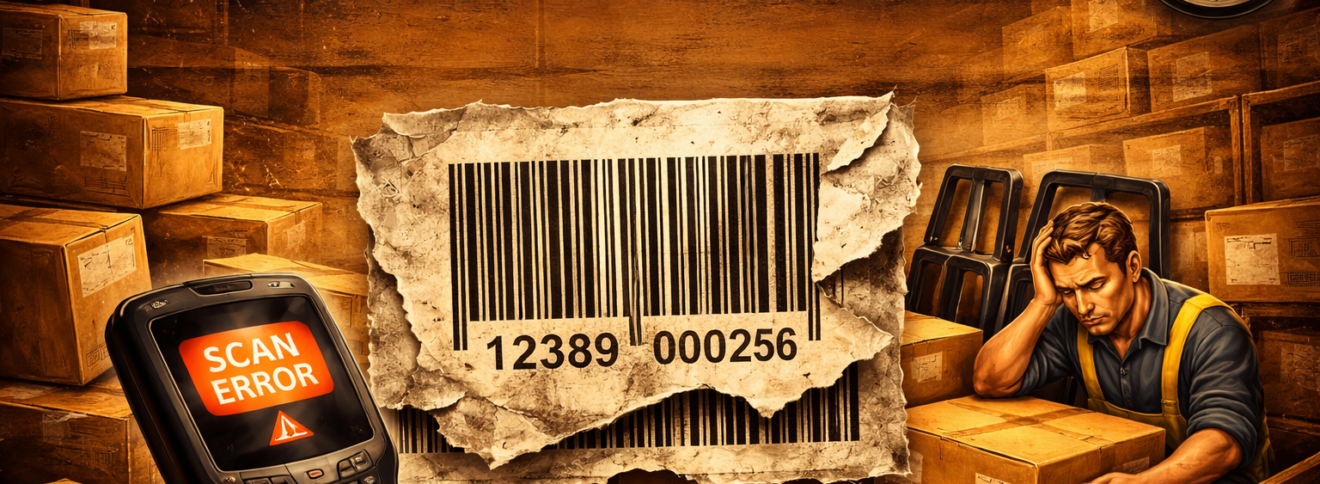
Scene 1: Picker grabs item → scans → error
Scene 2: Wrong label prints → reprint → confusion
Scene 3: Order ships wrong → customer emails → refund
Multiply that by 50–500 orders per day…
Now you understand why your team feels “busy” but not productive.
The Truth: Labeling Mistakes Are Silent Killers
Most teams don’t track this, but here’s what’s actually happening:
-
Manual entry errors happen 1 in every 300 keystrokes
-
Barcode scanning is 10,000x more accurate than manual entry
-
Yet many warehouses still rely on:
-
Manual SKU entry
-
Inconsistent labeling formats
-
Non-standard barcode practices
-
Result: constant “micro-errors” that compound into hours of lost labor
The 6 Most Common Labeling & Barcode Mistakes (That Cost You Hours Weekly)
1. Inconsistent Barcode Formats
-
Different SKUs using different barcode standards
-
Leads to scan failures and manual overrides
Impact: Slows picking + increases error rates
2. Printing Labels From Multiple Systems
-
WooCommerce label here
-
WMS label there
-
Carrier label somewhere else
Impact: No single source of truth → confusion + wrong items packed
3. Poor Label Placement
-
Curved surfaces
-
Covered by packaging
-
Hard to scan
Impact: Re-scans, delays, and frustrated staff
4. Low-Quality or Faded Labels
-
Cheap printers or wrong settings
-
Ink fading or smudging
Impact: Missed scans = manual entry fallback
5. No Standardized Receiving Process
-
Items come in without consistent labeling
-
Team “figures it out” on the fly
Impact: Inventory inaccuracies start at the door
6. Over-Reliance on “Human Memory”
-
“We know where that goes”
-
“That SKU is always this”
Impact: Breaks instantly at scale
What This Actually Costs You
Let’s quantify it:
-
Barcode systems can improve accuracy to 98–99% vs 63% manual
-
Poor processes lead to:
-
15% of orders needing rework
-
34% of businesses shipping late orders
-
Hours lost weekly fixing avoidable mistakes
-
Even a small warehouse can lose 10+ hours/week to labeling inefficiencies alone
What High-Performing Warehouses Do Differently
Top-performing operations don’t just “use barcodes”
They design their entire workflow around them:
-
Standardized barcode formats across all SKUs
-
One system controlling labeling and printing
-
Scan-based workflows (no manual typing)
-
Clean, consistent label placement rules
-
Real-time inventory updates
And the results?
-
99.9% picking accuracy with barcode systems
-
60% faster inventory counts
-
25% lower labor costs from automation
The Big Insight Most Teams Miss
This isn’t about buying a better printer.
It’s about this:
Labeling is not a task. It’s a system.
If your labeling and barcoding process is not:
-
standardized
-
automated
-
and enforced at every step
You will always be:
-
fixing errors
-
chasing inventory
-
and losing time
Final Thoughts (And Where to Go From Here)
If your team is:
-
reprinting labels daily
-
double-checking orders
-
or constantly troubleshooting scans
You’re not alone.
But you don’t have to operate like that.
Let’s Fix It
Schedule a call with us and we can take a look at your current workflow and show you:
-
Where your labeling process is breaking
-
What’s costing you the most time
-
And how to streamline it without adding complexity
Let’s turn your warehouse from reactive → predictable.


