

 4 min read
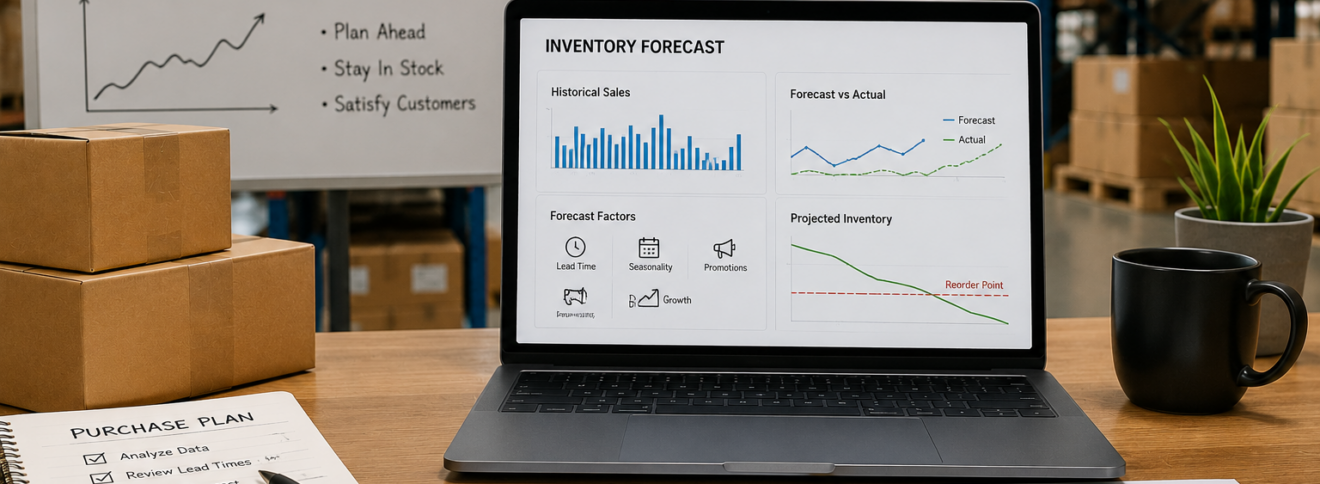
 Historical sales are one of the most valuable tools available for inventory planning. They provide insight into purchasing trends, product demand, and sales performance over time.
However, historical sales are only the starting point.
One of the most common inventory forecasting mistakes businesses make is assuming the past will always predict the future. While historical sales help explain what has already happened, effective inventory forecasting requires businesses to prepare for what comes next.
The most successful inventory managers combine historical data with future planning to make better purchasing decisions and reduce the risk of costly stockouts.
Historical Sales Tell You Where You’ve Been
Looking at previous sales can reveal valuable trends.
For example, imagine a product consistently sells 10 units per day. Based solely on that information, you might calculate exactly how much inventory is needed for the coming month.
While this provides a solid foundation, it does not account for the many variables that influence future inventory requirements.
Customer demand is constantly changing, and supply chains rarely remain static.
Forecasting Looks Beyond Sales History
Inventory forecasting is about estimating future demand while accounting for changing business conditions.
Some of the most important forecasting factors include:
- Supplier lead times
- Seasonal demand
- Promotional events
- Product launches
- Business growth
- Market trends
- Safety stock requirements
- Incoming purchase orders
Each of these variables can significantly impact when inventory should be replenished.
Ignoring them increases the likelihood of stockouts or excess inventory.
Lead Times Can Change Everything
Supplier lead time is one of the most overlooked forecasting variables.
Imagine your supplier normally delivers inventory within 14 days.
Your purchasing process has been built around that schedule.
Now imagine shipping delays increase your lead time to 30 days.
If your purchasing decisions remain unchanged, inventory may be depleted long before replacement inventory arrives.
Lead time changes are common due to manufacturing delays, transportation disruptions, weather events, customs processing, and supplier capacity constraints.
Businesses that continuously monitor lead times can adjust purchasing decisions before inventory shortages occur.
Demand Is Not Constant
Historical sales provide averages.
Customers do not.
Demand often fluctuates because of:
- Holiday shopping seasons
- Marketing campaigns
- Social media exposure
- Industry trends
- Product launches
- Economic conditions
A product selling ten units per day today could suddenly begin selling twenty or thirty units per day after a successful promotion.
Without forecasting those changes, purchasing plans quickly become outdated.
Stockouts Start Earlier Than Most Businesses Think
Many businesses believe a stockout begins when inventory reaches zero.
In reality, the stockout usually begins much earlier.
It begins when the purchasing decision is made too late.
Once supplier lead times, transportation schedules, and receiving processes are considered, there may no longer be enough time for replenishment to arrive before inventory runs out.
This is why forecasting focuses on planning ahead rather than reacting after inventory becomes low.
Better Forecasts Lead to Better Inventory Decisions
Effective inventory forecasting combines historical performance with forward looking planning.
Businesses that consistently evaluate future demand alongside operational factors are better positioned to:
- Reduce stockouts
- Improve customer service levels
- Place purchase orders earlier
- Maintain healthier inventory levels
- Improve inventory turnover
- Reduce emergency purchasing costs
Forecasting is not about predicting the future with perfect accuracy. It is about making better purchasing decisions using the best information available.
Build a Smarter Inventory Forecasting Strategy
Historical sales should always be part of your inventory planning process, but they should never be the only factor driving purchasing decisions. By combining sales history with supplier lead times, seasonality, expected demand, safety stock, and business growth, you can make more informed replenishment decisions and reduce costly inventory shortages.
If you’d like to see how SKULabs helps businesses use inventory data to support smarter purchasing decisions, schedule a call with one of our inventory experts. We’ll help you evaluate your current workflow and show you practical ways to improve your inventory planning strategy.


